 Sizu
Garden Area
Add up rectangles, triangles and circles, subtract the patio and pond, get net growing area.
Beds, soil, spacing & the numbers that grow food — Book 4 of the Workout Series.
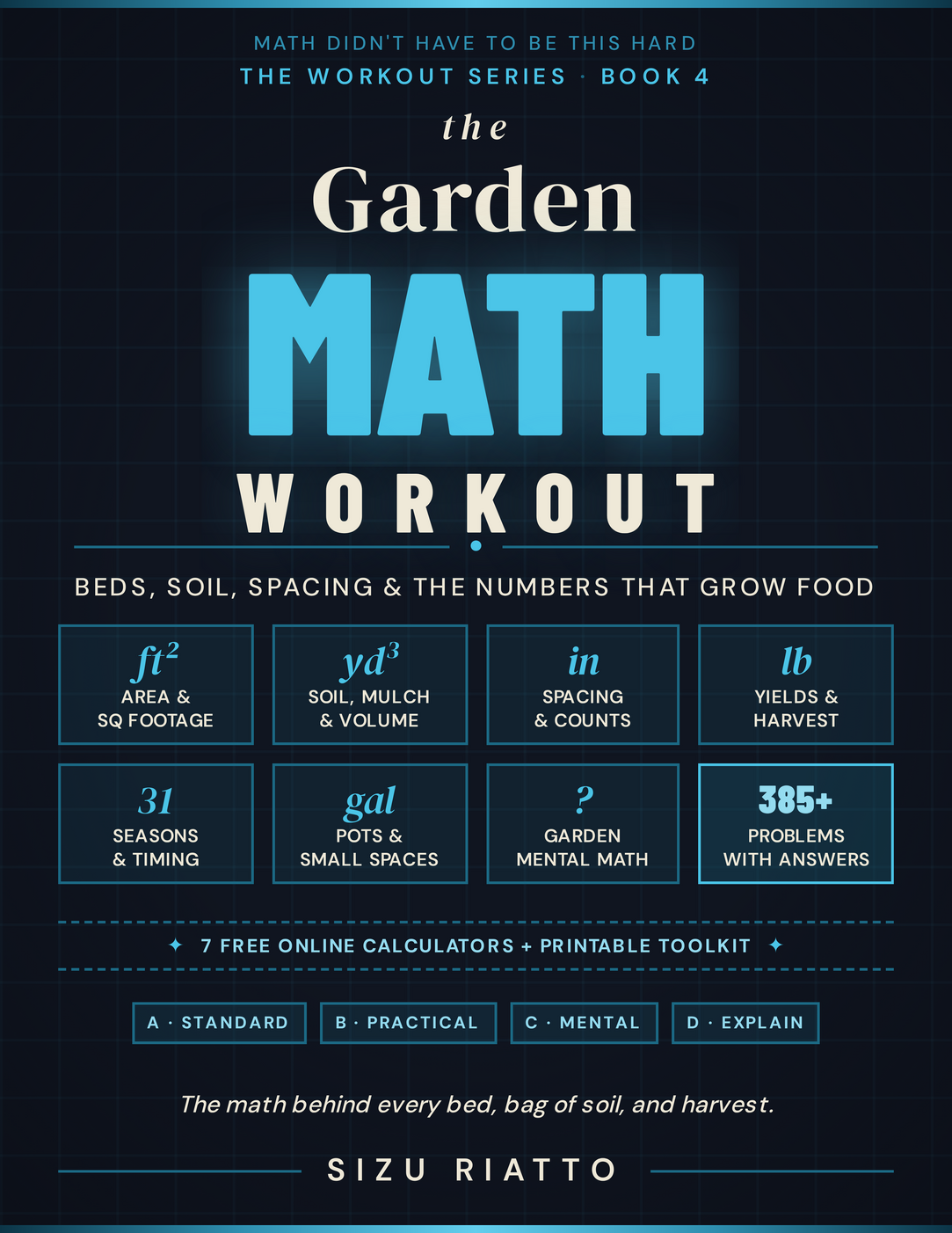
The arithmetic a garden actually asks of you, in the order a season asks it: how big the beds really are, including the awkward L-shaped and circular ones; how much soil or mulch that means, in bags and in cubic yards, and which of the two is genuinely cheaper; how many plants a bed holds at the spacing on the seed packet, and how many seeds to buy for it; how to plan backwards from the jars you want in the pantry to the plants that fill them, losses included; how to turn two frost dates into a seed-starting calendar and a last-sensible-planting deadline; how to size a pot in gallons and check what it weighs on a balcony; and the estimates that get you through the garden centre without a calculator. Series brand: Math Didn't Have To Be This Hard.
Add up rectangles, triangles and circles, subtract the patio and pond, get net growing area.
Cubic feet, cubic yards and bag counts — then bags priced against a bulk delivery.
Rows, plants per row and the square-foot cross-check, plus seeds to buy at your germination rate.
Work back from the jars you want to the plants you need, with a waste allowance built in.
Two frost dates give you season length, seed-starting dates and a succession-sowing schedule.
Gallons a pot really holds, what it weighs wet, and whether the balcony can take the load.
Timed practice on the estimation shortcuts the chapter teaches.
All seven garden-math tools, gathered and sized to print. No sign-up.