 Sizu
One Jar, One Blend
A spice rub in parts turned into grams for any batch, the jars it fills, and teaspoons to grams.
Marinades, dehydrating, rubs and quick pickles, worked out step by step: plant-based jerky, fruit chips and seasonings for your kitchen, your gifts and a small home food business. Know the yield, the salt, the cost and the price before the dehydrator goes on.
Home › Books › Vegan Pantry Math
Not for: canning (water-bath or pressure), meat or fish, wild-foraged mushrooms, or diet and health advice. Metric first, US units beside it; every price illustrative and dated October 2026.
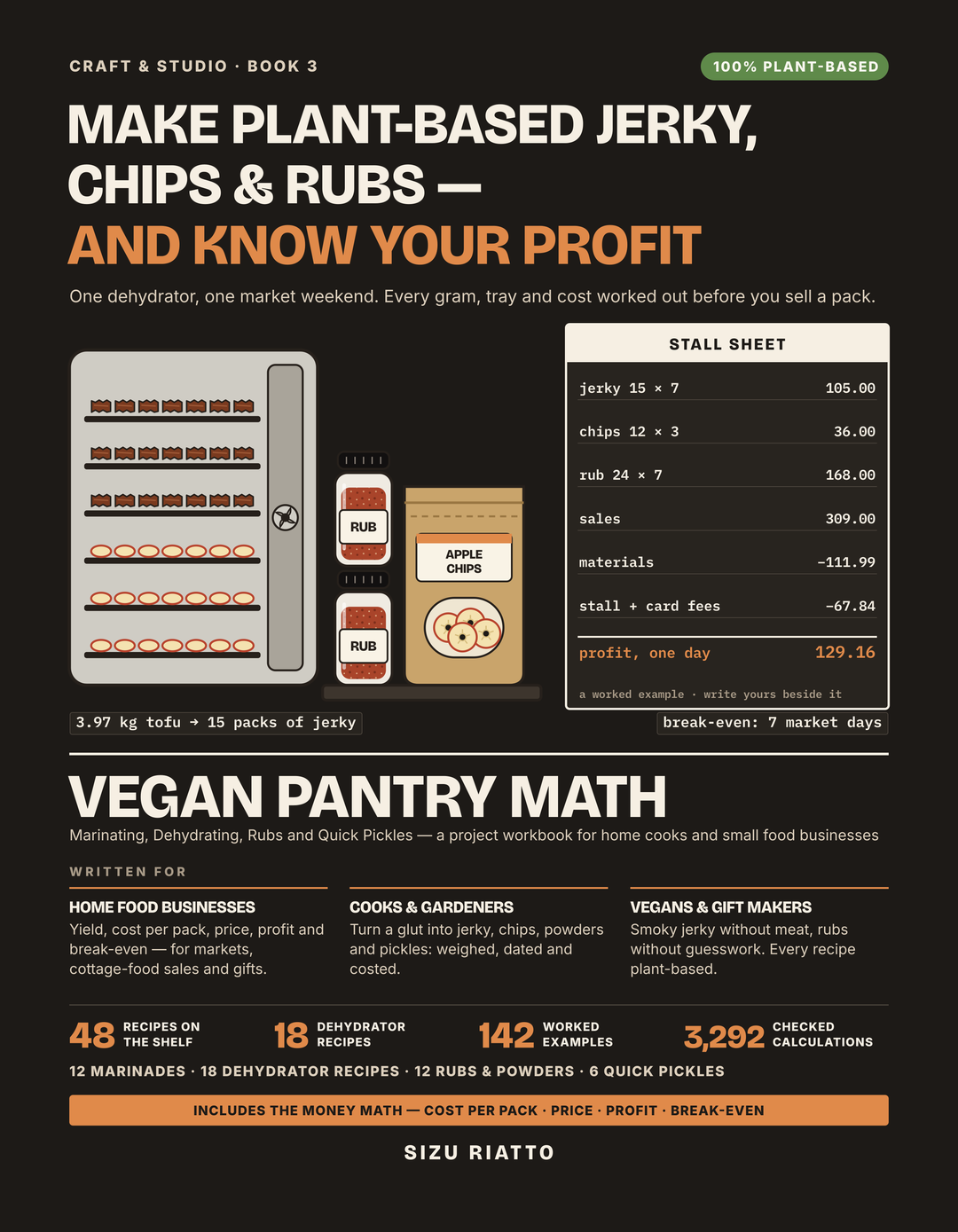
One dehydrator, one weekend, three products for a market stall, and every chapter adds one number to it.
48 recipes: 12 marinades, 18 dehydrator recipes, 12 rubs and powders, and 6 quick pickles, each written as a formula you can scale. They are worked out on paper from published ratios and USDA data: make a small test batch first.
The book was written in collaboration with AI tools and reviewed by the author. Its numbers are checked by a verification program, and its figures are drawn by the same program, but mistakes may remain: see corrections & errata. The book does the arithmetic and names the authority; it is not a food-safety assessment. Water activity must be lab-tested, and selling food from home follows your own state's or council's rules.
Each calculator opens on the book's Stall Batch and shows its formula, so you can check it by hand.
A spice rub in parts turned into grams for any batch, the jars it fills, and teaspoons to grams.
Any recipe as percents of the whole, scaled and rounded to your scale, with the salt's sodium and the net-weight line.
How salty a marinade really is, from tamari's sodium and the rub's salt; brines to a percent; dilution.
Press loss and the water left, the marinade to make, what the strips take up, and the soak time by thickness.
A percent formula to grams and volumes for any amount of food, the acid it carries, and a quick-pickle brine.
Fresh to dried weight from the water %, the water that leaves, and the scale reading that says it's done.
Load per tray from area, coverage, thickness and density; produce to buy after trimming; trays for a target.
Tofu to dried jerky, packs and spare, sodium per 30 g serving, and a lab water-activity result against 0.85.
Chips into packs with the label weight, a powder's yield, and a chili blend's heat as a weighted average.
Electricity per run and per pack, an oxygen absorber's size, and a best-by date from the NCHFP guide.
Pack prices to price per gram (liquids by density), then a pack of jerky, chips or rub with its pouch and your time.
Markup and margin, a market day's profit after the stall and card fees, and the days to pay back the kit, charted.
Four fill-in sheets for each batch: the shopping list, the batch sheet, the pricing sheet and the label sheet.
What one Stall Batch needs, the pack to buy, its price and how many batches it covers.
The rub, the jerky from press to pack, the chips from apples to packs, and a tray weight log.
Cost per pack, your time, price and margin, a market day's profit and the break-even days.
Name, net weight rounded down, ingredients heaviest first, allergens and the maker, for each product.